
All Posts By

admin

Why Most Offshore Hiring Risk Is Created Before a Candidate Is Ever Hired – What Real Support Should Look Like Once Your Team Goes Remote

By Press

By Kristantia Govender, Talent Acquisition & Operations Specialist at Workforce Remote Staffing

Offshore hiring rarely fails at the moment it appears to fail. By the time performance slips, communication breaks down, or a senior team member is pulled back in to manage what should be operating independently, the damage was done weeks or months earlier – quietly, during the setup and early stages of the process itself.

This is where most offshore hiring models break down, and where Workforce Remote Staffing operates differently. Hidden fragility is often built into how roles are defined, how individuals are introduced into the business, and how they are supported once they begin. We take ownership of this process end to end, applying the structure, consistency, and rigour required to turn offshore hiring from a risk into a reliable extension of your business.

When Structure Is Missing, Problems Are Inevitable

Loosely defined roles create ambiguity from day one. When a position is described only through a list of skills rather than tied to delivery outcomes, candidates step into work that is poorly framed. Clients then find themselves filling gaps informally, often without realising they are compensating for gaps created during recruitment.

Assessment inconsistency compounds this issue. When the criteria used to evaluate candidates shift between interviews, or are never clearly defined to begin with, selection becomes subjective. Strong candidates may be passed over. Weaker fits may advance because they interview well. By the time this surfaces in the work, the connection to recruitment is no longer obvious.

Speed accelerates all of it. Filling a role quickly feels like progress, and in the short term it is reassuring. But speed without structure compresses decision-making into instinct rather than evidence. Vetting softens. Context is lost between conversations. For a while, everything still appears to function.

Over time, however, small inefficiencies accumulate. The same clarifications are repeated. Senior team members remain more involved than anticipated. Oversight increases instead of tapering off. What was meant to create capacity begins absorbing it.

What A Structured Process Actually Looks Like

Consider a client looking to introduce an offshore operations coordinator. In many cases, the role is not fully defined at the outset. There is a general sense of the support required, but not always complete clarity on responsibilities, decision-making boundaries, or how the role should integrate into the wider team.

A reactive approach will often move quickly to fill that gap. A candidate is selected based on relevant experience, interviews are completed, and the role is filled. For a short period, this feels like progress.

Over time, however, gaps begin to surface. Questions arise around priorities, ownership, and handoffs. Senior team members remain more involved than expected, and the role starts to absorb time rather than create capacity.

At Workforce Remote Staffing, we approach this differently. We work with our clients to shape the role in context, bringing clarity to what the individual will be responsible for and how they will operate within the business. This continues through the recruitment process, where assessment remains consistent and aligned to the outcomes the role is intended to deliver.

Once the individual starts, structure does not fall away. Onboarding is designed to ensure the individual integrates effectively into the team, with clear expectations, communication rhythms, and early support in place. During the first 30 to 90 days, we remain closely involved, helping both the client and the individual establish a working dynamic that allows the role to operate with increasing independence.

Beyond this initial phase, ongoing support and structured performance management ensure that the role continues to deliver as intended. Challenges are addressed early, expectations remain clear, and the individual is supported to grow into the role rather than struggle within it.

The result is not just a successful hire, but a role that functions as a reliable and integrated part of the business.

With The Right Remote Partner, The Result Is Consistent, Predictable Delivery

The most effective offshore hiring is often the least eventful. When roles are shaped in context, onboarding is structured, and support continues beyond day one, remote teams can operate as a genuine extension of the business rather than an area requiring ongoing correction.

This is where many offshore models fall short. Even where the right individual is hired, a lack of structure through onboarding, early-stage support, and ongoing alignment can prevent the role from ever fully delivering as intended.

At Workforce Remote Staffing, our focus is not only on securing the right individual, but on ensuring the role is set up to succeed within your business. From how the role is defined, to how the individual is integrated, and how performance is supported over time, we take a structured, end-to-end approach that allows capacity to build in a stable and predictable way.

If you are currently scaling or considering offshore support, it is worth taking a step back to assess how those roles are being structured and supported today.

We work with our clients to define, implement, and support these roles end to end, ensuring they deliver as intended. If you would like to see how this could apply within your business, we can take you through it in a practical, no-obligation discussion.

The Hidden Cost of Standing Still

By Press

By Tania Govender, Managing Director  at Workforce Remote Staffing

A lot of UK businesses are not standing still because they lack ambition. They are standing still because scaling has become expensive, slow, and difficult to reverse.

Hiring locally carries real weight. Permanent headcount brings long-term commitments at a time when demand is not always predictable. When costs are high and visibility is limited, waiting can feel like the responsible option.

So teams stretch. Leaders absorb more. Hiring decisions get pushed out until things feel clearer.

On its own, that is not a bad decision. In many cases, it is a very rational response to the environment businesses are operating in.

The problem is what happens quietly while everyone is waiting.

The work does not disappear. It simply shifts. Tasks that do not really require senior judgement start landing with senior people anyway. Reporting, admin, coordination, follow-ups, operational tasks that keep the wheels turning but do not move the business forward.

Over time, some of the most experienced and highest-paid people in the organisation begin spending a significant part of their week on low-value work. Not because it makes sense, but because there is no alternative capacity.

At first, this feels manageable. High performers are good at coping. They step in, fill gaps, and keep delivery on track. From the outside, everything still looks fine.

But gradually, capacity tightens.

Strategic thinking gets squeezed into smaller windows. Decisions take longer than they should. Reviews are rushed. Delivery becomes more fragile, even though nothing appears obviously broken. Small inefficiencies stack up quietly until they start showing up in missed opportunities, slower response times, or inconsistent client experience.

By the time the business feels ready to scale again, it is often doing so from a weaker position. Leaders are stretched. Margins are under pressure. The original cost concern has not disappeared. It has compounded.

This is where standing still becomes misleading. Doing nothing is not neutral. It carries a cost, even if that cost does not show up clearly on a spreadsheet.

Many organisations believe they are choosing between two options. Either absorb the cost of local hiring or pause and hold steady. In reality, there is a third option that often gets overlooked.

Instead of asking who to hire, some businesses step back and ask where work is being done expensively simply because that is how it has always been done. They separate work that genuinely needs senior judgement from work that is process-driven, repeatable, and supportive. They look for ways to introduce capacity without locking themselves into high-cost, inflexible structures.

This is where well-designed offshore staffing becomes a strategic decision rather than a cost-cutting one.

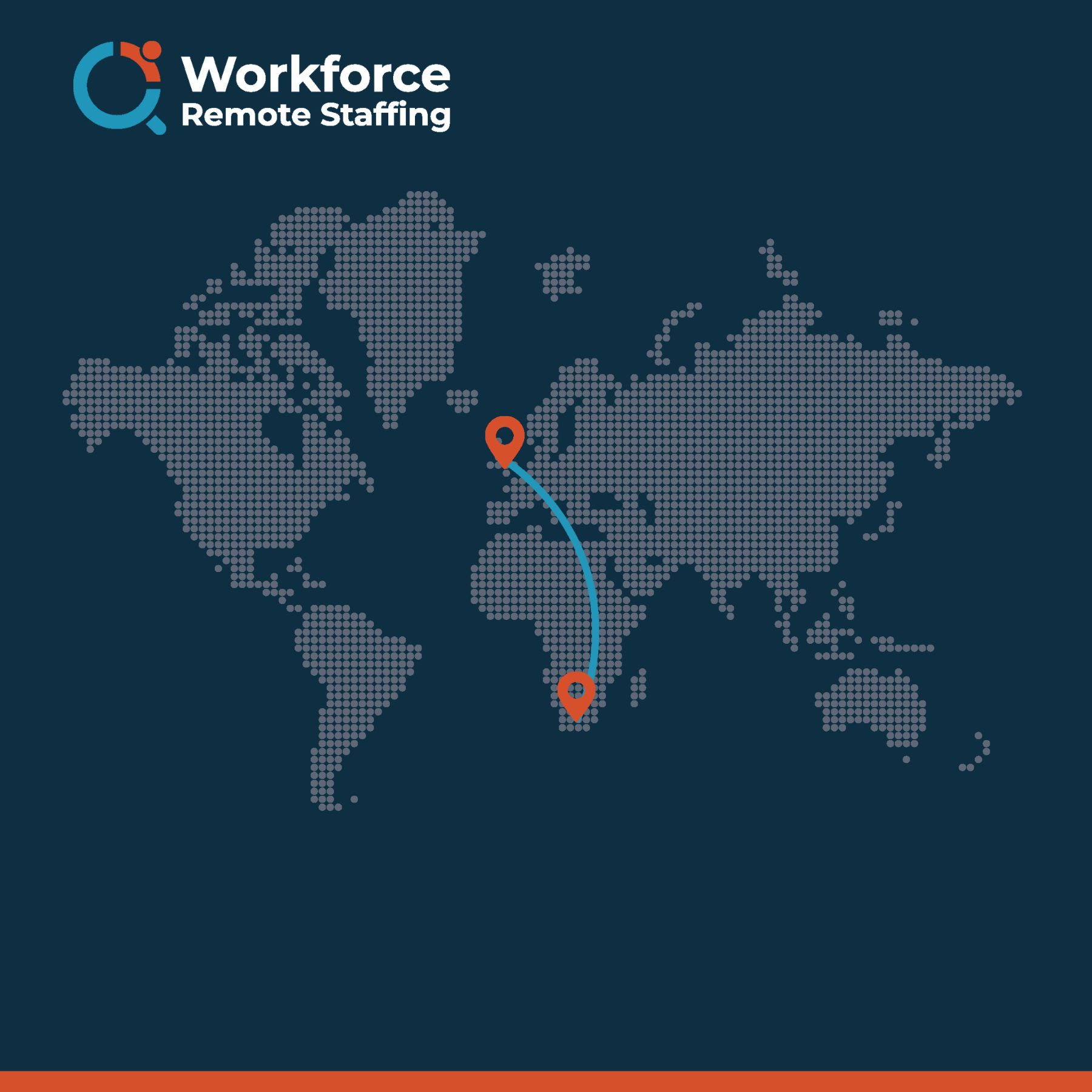
At Workforce Remote Staffing, we work with UK businesses that are not looking to replace teams or rush growth. They are looking to protect senior capacity, stabilise delivery, and create room to move without taking on unnecessary risk. By building dedicated remote teams in South Africa, aligned to UK time zones and fully managed through an employer-of-record model, businesses can add capability where it makes sense, without adding complexity.

South Africa offers a deep pool of experienced, English-speaking professionals who are used to supporting UK and international teams. When those professionals are employed, managed, and supported properly, they take ownership of the work that currently sits in the gaps. The admin, reporting, coordination, and support tasks that quietly consume senior time.

The impact is not dramatic overnight change. It is something more valuable. Senior leaders regain focus. Delivery becomes more consistent. Growth decisions are made from a position of control rather than pressure.

High costs do not remove the need to scale. They simply change how scaling should happen.

Standing still often feels safe because it avoids immediate spend. Over time, it is usually the most expensive option of all, not in salaries, but in lost focus, increased delivery risk, and slowed momentum.

The businesses that recognise this early tend to move forward with more confidence later. Not because they rushed, but because they chose to redesign capacity instead of waiting for the perfect moment that never quite arrives.

Cost Efficient Scale in 2026: The Workforce Model Redefining UK Operations

By Press

By Tania Govender, Managing Director

UK businesses are entering a period where growth targets and operational constraints will need to co-exist. Planning for 2026 is already underway, and the organisations that scale successfully will be those that build flexible, efficient and resilient workforce structures. Hard to fill roles remain a challenge for many UK employers, particularly in administrative, finance support and service driven functions. Time to hire remains lengthy across many occupations, and cost pressure continues to influence hiring decisions.

This means traditional approaches to scaling are no longer sufficient. UK employers need ways to increase capacity without elevating overheads or exposing the organisation to unnecessary compliance complexity. This is driving a shift to blended workforce strategies that combine local teams with remote international talent. Remote work is now a permanent element of UK business operations, and many companies are extending this model across borders to unlock capacity, protect budgets and stabilise delivery.

South Africa has become a strategically valuable location for UK employers looking to expand their operational capability. The alignment is practical and commercial. Talent quality remains high across business support, finance, digital functions, marketing, administration and customer operations. Professionals are English fluent, culturally aligned and accustomed to UK working expectations. The shared working hours give UK teams real time collaboration with remote staff. Most importantly, the cost structure provides a measurable advantage at a time when UK organisations are under pressure to optimise.

The Employer of Record model gives UK employers a compliant and low risk route to tap into this talent pool. Workforce Remote Staffing acts as the legal employer in South Africa, taking responsibility for employment contracts, payroll, statutory contributions, HR governance and day to day employment administration, supported by GDPR aligned data handling practices. UK organisations manage the work and performance directly, while WRS ensures all South African employment requirements are met. This protects the UK business from South African tax and labour exposure while giving them full operational benefit from the remote team.

Preparing early for 2026 is critical. UK employers should evaluate which roles create bottlenecks, where specialists are in short supply, and which functions rely heavily on digital or process-based work. These roles transition well into remote delivery and provide immediate relief to internal teams. Many organisations start with one or two positions, prove the effectiveness of the model, and scale rapidly once the operational uplift becomes clear.

Workforce Remote Staffing supports UK businesses through this entire scaling journey. We recruit and employ South African professionals who work exclusively for your organisation, aligning to your processes, culture and objectives. Our governance framework is designed to remove risk, streamline operations and deliver consistent performance.

Scaling in 2026 requires a plan that is proactive, cost efficient and operationally grounded. For many UK employers, remote staffing through a South Africa based Employer of Record will be a key part of that strategy.

Plan ahead for 2026. Book a discovery call to explore how South African remote talent can strengthen your capability, stabilise operations and support cost efficient scale.